Stem Cells and Growth Factors in Skincare: Hype or Real Science
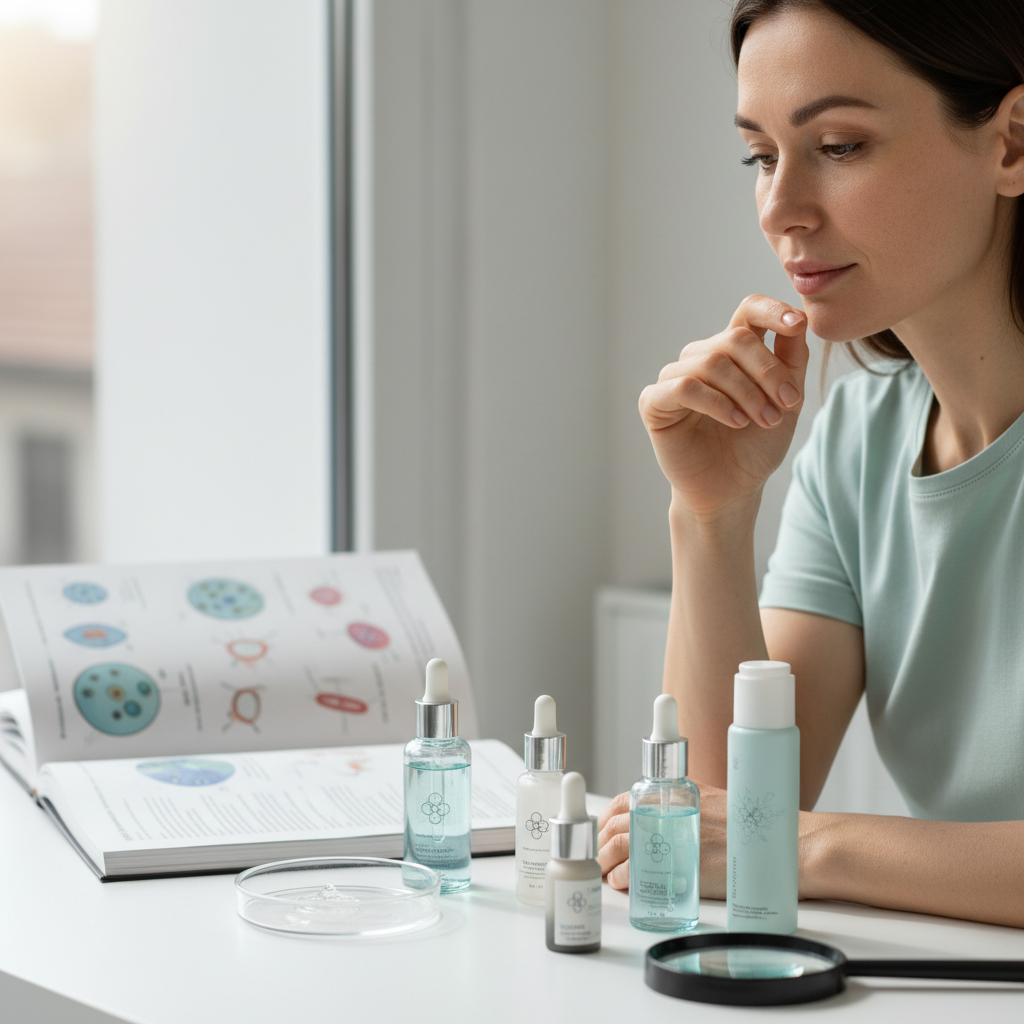
Both, honestly. Most products labeled “stem cell” contain no living cells at all. What works are the growth factors and signaling proteins those cells release, and human-derived versions have real clinical backing for smoother texture and softer lines. Plant “stem cells” and untested exosome claims are where the marketing runs ahead of the evidence.
What is actually inside a stem cell serum
Almost never stem cells. The active ingredients are growth factors, cytokines, and peptides harvested from the fluid that cultured cells leave behind, often called conditioned media. Some jars use plant stem cell extracts instead. The “stem cell” on the label describes the source, not the contents.
This matters because the name does the selling. You picture living cells rebuilding your face. The reality is a cocktail of proteins that tell your own cells what to do, which is a more modest and more believable promise.
Once you know that, the category gets easier to judge. You stop asking “are there cells in here” and start asking “which signaling molecules, from what source, and can they reach my skin.”
Why living stem cells cannot survive in a jar
They simply die. Living stem cells are fragile, and they cannot stay viable sitting on a shelf in a tube or pump for months at room temperature. Any product claiming active cells inside is either mistaken or stretching the truth.
What survives storage is the secreted material, the proteins and lipids the cells produced while alive. That is the part formulators stabilize and bottle. It is also the part the better brands are honest about.
What growth factors do for aging skin
Growth factors are messengers that prompt your skin to renew itself. They signal fibroblasts to make collagen and elastin, support cell turnover, and help repair the barrier. Epidermal growth factor, or EGF, is a polypeptide that encourages cell differentiation and collagen production while nudging melanin production down.
That last point is why brightening and smoothing often show up together in results. In our experience, readers expecting an overnight filler effect are disappointed, while those treating growth factors as a slow renewal tool tend to stick with them. You can read the mechanics of related actives in our guide on how peptides work in skincare, since peptides and growth factors share the same signaling logic.
For a focused single-ingredient option, an epidermal growth factor face serum is the most studied starting point.
Plant stem cells versus human-derived: the honest gap
They are not interchangeable. Plant stem cells do not speak the same biological language as human skin. Your cells lack the receptors to read a plant signal, so the regenerative claims borrowed from human biology do not transfer.
That does not make plant extracts useless. Many are solid antioxidants and can calm and protect. Just expect antioxidant-level benefits, not collagen-rebuilding ones.
Human-derived growth factors carry the strongest evidence. They are native to your biology, so the messages actually land.
Does the science actually hold up
For human growth factors, yes, with limits. Studies have linked topical human growth factors to reduced fine lines, better texture, and improved overall appearance after consistent use. A randomized trial found EGF significantly sped the healing of partial-thickness skin wounds, and reviews report anti-inflammatory and antioxidant effects.
The honest caveat: researchers still do not fully map how every growth factor works on intact skin, and protocols and dosages are not standardized. The evidence is encouraging, not airtight. According to the documented biology of EGF, the molecule is well characterized, even if cosmetic outcomes vary by formula.
The penetration problem nobody advertises
Size is the catch. Growth factors are relatively large molecules, and they struggle to cross a healthy skin barrier. A protein that cannot get past the surface cannot signal the fibroblasts living deeper down.
This is why delivery system and molecular weight matter as much as the ingredient itself. Some brands use smaller fragments, encapsulation, or pair their serums with microneedling to bridge the gap. Without a delivery strategy, even a potent growth factor can underperform.
Why formulation decides everything
A great molecule in a bad formula does nothing. Growth factors are delicate, and stability is the quiet make-or-break factor. One stability study found that drying the protein cut its degradation rate by roughly 70 to 100 times compared with leaving it in a water-based solution.
That single fact reframes shopping. A growth factor floating in a runny watery serum may be losing potency before you finish the bottle.
The classic mistake we see is buying on ingredient name alone. Look at the format, the packaging, and whether the brand discusses stability at all.
Where exosomes fit in 2026
Promising, but legally unsettled. Exosomes are tiny vesicles that carry growth factors, proteins, and genetic material, and they may deliver more targeted signals than older formats. The hype is loud for a reason.
The regulatory reality is sober. As of 2025 no topical or injectable exosome product is FDA-approved for any skin condition, and the agency has flagged the category since its 2020 consumer alert. The FDA’s standing caution on stem cell and related products is worth reading before you spend.
How to layer growth factors with retinol and vitamin C
Apply growth factors first, on clean damp skin. Let them absorb for a few minutes before you layer anything stronger. The order protects the proteins and improves uptake.
Acidity is the trap. Low-pH vitamin C, the L-ascorbic acid kind, can inactivate growth factors, so space them by about fifteen minutes or use them at opposite ends of the day. Retinol, by contrast, pairs beautifully and the two enhance each other.
Here is a simple, safe routine many people settle into:
- Morning: cleanse, growth factor serum, vitamin C only if spaced apart, then sunscreen.
- Evening: cleanse, growth factor serum, wait, then retinol and moisturizer.
- Sensitive skin: patch test first and build frequency up slowly.
Are growth factor serums safe
For topical cosmetic use, the current evidence is reassuring. Conditioned media has a strong safety record because it contains no living cells, which removes immune-rejection risk, and the proteins are native to human biology.
Reactions happen but stay uncommon. A small number of people get redness, itching, or mild irritation from protein sensitivities. What we most often see is tolerance issues from stacking too many actives at once, not from the growth factor itself.
FAQ
How long until growth factor serums show results
Plan on eight to twelve weeks of daily use. Growth factors work by signaling slow processes like collagen renewal and cell turnover, so changes in texture and fine lines build gradually. If a product promises visible lifting in days, treat that as marketing, not biology.
Are plant stem cell creams a waste of money
Not a waste, but mislabeled in spirit. Plant stem cell extracts behave as antioxidants and soothing agents, which has real value for protection and calming. They do not regenerate skin the way human-derived growth factors can, so buy them for what they genuinely do.
Can I use growth factors if I am pregnant
Check with your doctor first. There is limited safety data on growth factor serums during pregnancy or breastfeeding, and individual products vary widely in source and concentration. Many people pause newer actives during this window and lean on gentler, well-studied basics instead.
Are exosome serums better than growth factor serums
Possibly more targeted, but far less proven. Exosomes carry concentrated signaling cargo and excite a lot of clinicians, yet none are FDA-approved for cosmetic claims and peer-reviewed data is still thin. Growth factor serums have the longer track record today, so they remain the safer evidence-based pick.