Niacinamide and Peptides: The Anti-Age Power Couple
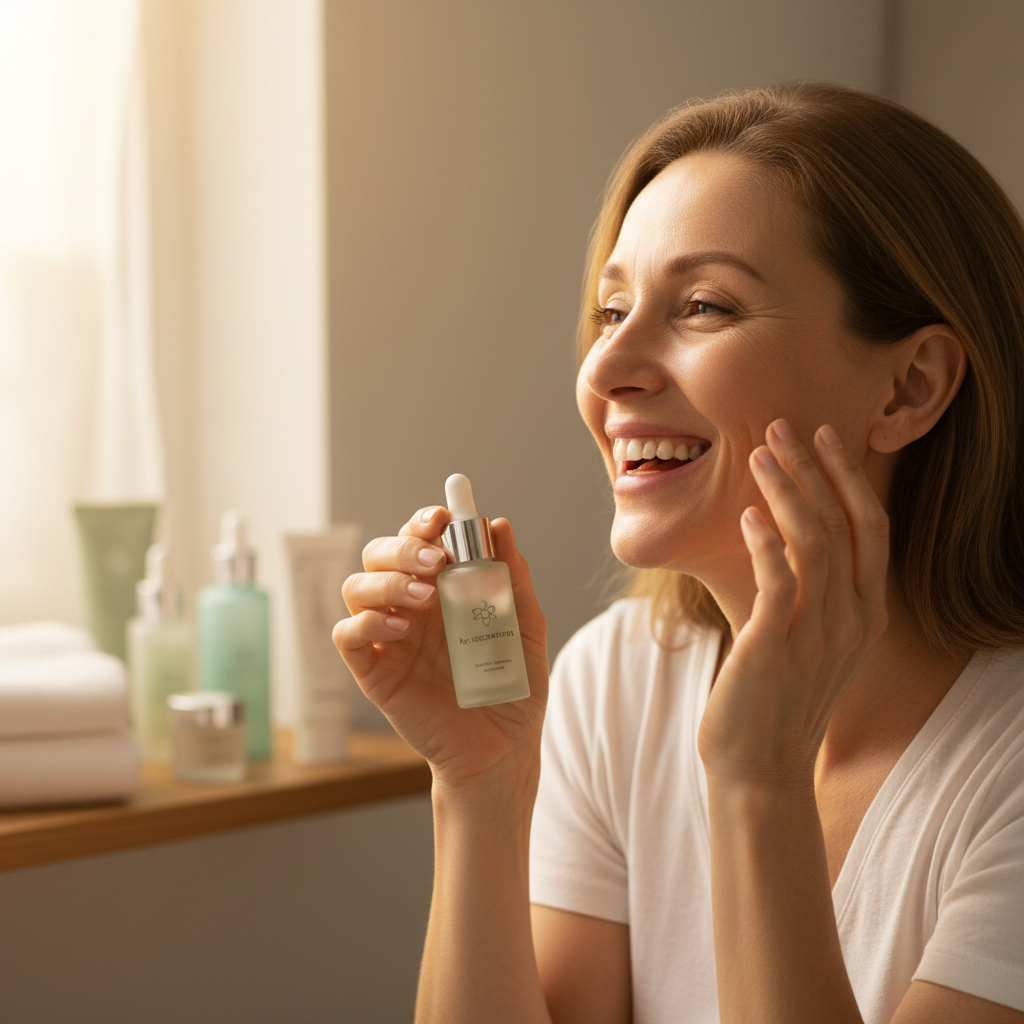
Niacinamide and peptides are one of the safest, most rewarding anti-age pairings you can layer. Niacinamide, a form of vitamin B3, strengthens the skin barrier and evens tone. Peptides signal your skin to rebuild collagen and elastin. Used together, they target firmness, texture, and resilience at once, with very little risk of irritation.
What niacinamide and peptides each do
These two ingredients solve different problems, which is exactly why they pair so well. Niacinamide manages oil, fades uneven pigment, and locks moisture into the skin. Peptides are short chains of amino acids that act as messengers, telling your skin to produce more of the structural proteins it loses with age.
Think of peptides as the contractors and niacinamide as the foundation crew. One rebuilds. The other keeps the whole structure stable and protected. If you are new to amino-acid chains and how they communicate with skin cells, our beginner’s guide to how peptides work breaks down the mechanism in plain language.
Why this duo belongs in an anti-age routine
The pairing covers more ground than either ingredient can alone. Aging skin loses collagen, leaks moisture, and shows blotchy tone all at the same time. A single active rarely addresses every front.
Peptides push collagen production. Niacinamide reinforces the barrier so that lost water stays in and the new collagen has a calm environment to form. You get firmer, smoother, more even skin without the sting or peeling that harsher actives can bring. For glowing, age-defying results, this is the kind of gentle, compounding strategy that actually holds up over months.
How niacinamide makes peptides work harder
Niacinamide does not just sit beside peptides, it improves the conditions they depend on. Peptides need a healthy, well-hydrated barrier to penetrate and signal effectively. A damaged barrier wastes them.
Research shows 2 to 5% niacinamide can raise ceramide production by roughly a third to two-thirds. Ceramides are the mortar between skin cells. More mortar means less water loss, a steadier surface, and a better runway for peptides to do their firming work. In our experience, clients who add niacinamide first see their peptide serums perform more consistently.
The science behind the pairing
Clinical evidence supports both ingredients individually, which is what makes the combination so credible. In a well-known double-blind trial, 5% niacinamide applied twice daily for 12 weeks visibly improved fine lines, elasticity, and skin tone.
Niacinamide also reduces transepidermal water loss and supports collagen by encouraging fibroblast activity. Peptides, meanwhile, are valued for nudging the skin’s own repair signals. You can read more about the vitamin itself on the nicotinamide overview at Wikipedia, and the barrier and pigmentation findings are documented in peer-reviewed research on PubMed Central.
How to layer niacinamide and peptides correctly
Layer by texture, not by ingredient name. The reliable rule is thinnest to thickest, so lightweight water-based formulas go on before richer creams.
A classic mistake we see is people stacking products in random order and assuming nothing absorbs. Here is a simple sequence that works for most skin types:
- Cleanser
- Toner or essence
- Niacinamide serum
- Peptide serum
- Moisturizer
- SPF in the morning
Apply niacinamide first, let it settle for a minute, then follow with your peptide formula. If you want to see what a finished peptide step looks like, browse a complete formula like the Matrixyl-3000 face serum.
Should you use them morning or night
Both ingredients are versatile enough for morning and evening use. They do not break down in daylight and they do not require darkness to work.
In the morning, niacinamide adds antioxidant defense against pollution and light stress while peptides support firmness through the day. At night, skin shifts into repair mode, and the same duo backs your natural overnight regeneration. Use them twice daily if your skin tolerates it. Once a day still helps.
What you should not mix with this duo
The niacinamide and peptide pair itself is friendly, but a few neighbors need spacing. Most signal peptides play nicely with almost everything, so the real cautions involve copper peptides specifically.
High-acidity vitamin C can destabilize copper peptides, so keep them at opposite ends of the day. Strong retinol used in the same layer as copper peptides may trigger irritation and blunt results. When in doubt, separate strong actives between your morning and evening routines rather than piling them together.
How long before you see results
Expect early comfort within two weeks and visible change closer to the one to three month mark. Skincare rewards patience, not impatience.
Most people notice a calmer, less tight barrier in the first week or two as niacinamide goes to work. Peptides take longer because rebuilding collagen is slow biology. Smoother texture often appears around six weeks, with firmer, more even skin showing over three to six months of steady use. We most often see people quit right before the best results would have arrived.
Who gets the most from this combination
This pairing suits anyone over 30 who wants firmer, more even skin without harsh downtime. It is especially kind to sensitive, reactive, or barrier-compromised complexions.
Picture a reader in her late thirties with early fine lines, occasional redness, and a tube of strong retinol she cannot tolerate. She swaps in niacinamide every morning and a peptide serum at night. Within two months the redness settles, the lines soften, and her skin finally feels resilient instead of raw. That is the typical arc we watch unfold.
A simple starter routine
Keep your first version short and consistent rather than complicated. Three steps beat ten abandoned ones.
Cleanse, apply niacinamide, then layer a peptide serum and seal with moisturizer. Add SPF every morning. Once your skin adapts after a few weeks, you can introduce other actives slowly, watching how your barrier responds before adding anything stronger.
FAQ
Can you use niacinamide and peptides together?
Yes, and they make an excellent team. Niacinamide and peptides do not cancel each other out or cause conflict. Niacinamide calms and strengthens the barrier while peptides rebuild firmness, so layering them in one routine is both safe and effective for most skin types, morning or night.
Should niacinamide go before or after peptides?
Apply niacinamide first, then your peptide serum. Layering follows texture, thinnest to thickest, and niacinamide serums are usually lighter and water-based. Letting niacinamide settle for a minute helps it strengthen the barrier before the peptide step, giving those amino-acid chains a healthier surface to penetrate and signal through.
How long until you see results from this pairing?
Most people feel a calmer barrier within two weeks. Visible smoothing tends to appear around six weeks, and firmer, more even-toned skin develops over three to six months. Collagen takes time to rebuild, so consistency matters far more than how much product you apply each day.
Is this combination safe for sensitive skin?
It is one of the gentler anti-age options available. Both ingredients support rather than strip the skin, which makes them suitable for reactive, red, or barrier-compromised complexions. Start once a day, patch test new formulas, and build up frequency slowly to confirm your skin tolerates the routine comfortably.
What should you avoid mixing with copper peptides?
Keep copper peptides away from high-acidity vitamin C and strong retinol in the same layer. Acidic vitamin C can destabilize copper peptides, and pairing them with potent retinol may cause irritation. Use vitamin C in the morning and copper peptides at night to keep both ingredients working at full strength.
“`
Sources used for the research behind this article:
– [PSA Skincare — Niacinamide & Peptides](https://psaskincare.shop/blogs/news/niacinamide-and-peptides)
– [Amino Innovations — Can You Use Niacinamide and Peptides Together?](https://aminoinnovations.com/mix-niacinamide-with-peptides/)
– [Inner Balance — The Science of Niacinamide for Anti-Aging](https://www.innerbalance.com/p/learn/science-niacinamide-anti-aging)
– [PubMed Central — Niacinamide & barrier/pigmentation study](https://www.ncbi.nlm.nih.gov/pmc/articles/PMC8879610/)
– [Procoal — Vitamin C and Copper Peptides](https://procoal.co.uk/blogs/beauty/can-you-use-vitamin-c-and-copper-peptides-together)