How to Layer Your Serums for a Real Anti-Aging Routine
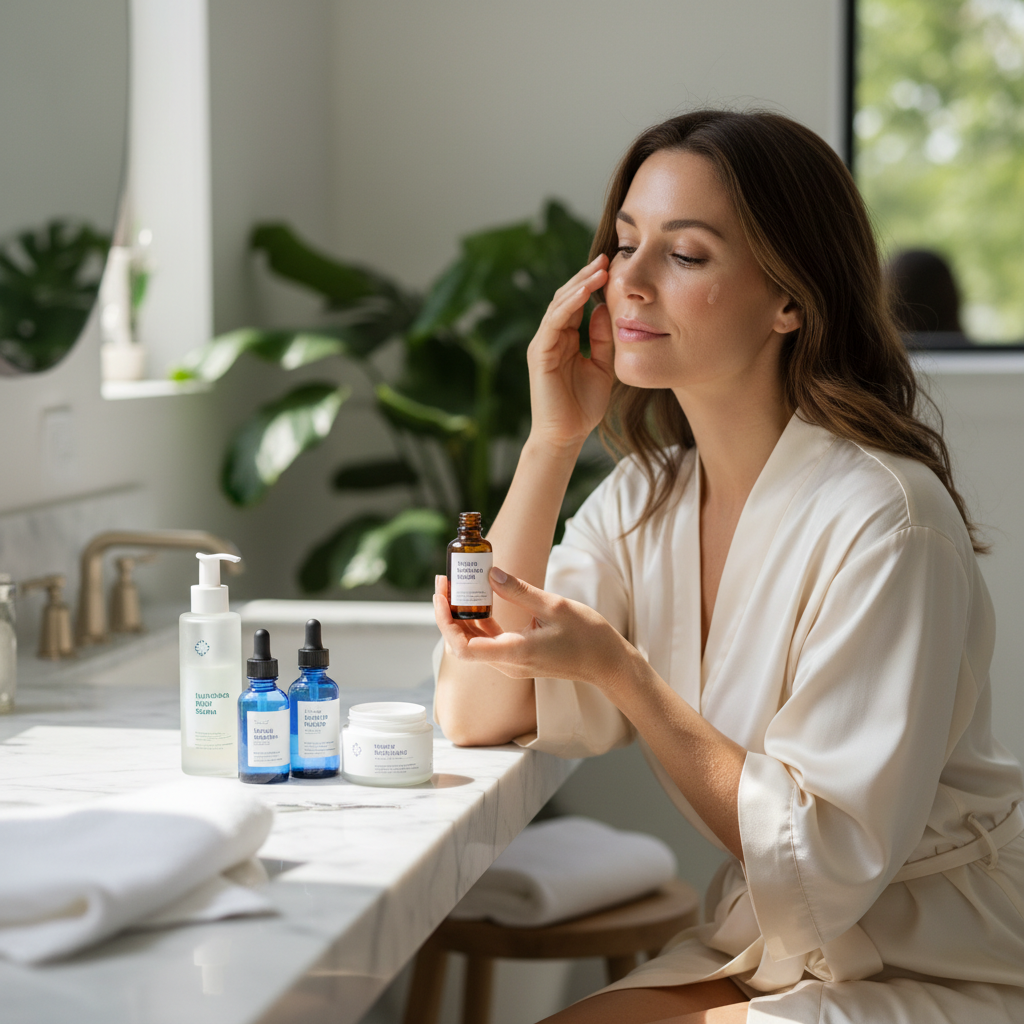
Layer your serums from thinnest to thickest. Water-based formulas go first, oil-based ones last, and you wait about a minute between each. Antioxidants like vitamin C belong in the morning, while retinoids and peptides work best at night. Stick to one or two serums per routine so your skin can actually absorb them.
The order that decides whether serums work
Apply serums right after cleansing and toning, before any cream or oil. This window is when your skin is most receptive, and active molecules reach living cells instead of sitting on the surface.
Sequence matters as much as the products themselves. Two excellent serums in the wrong order will underperform a single one applied correctly. You can have a shelf full of actives and still see nothing change.
So the rule is simple. Lightest first, richest last.
Why texture sets the sequence
Thin, watery serums absorb fast and need bare skin to penetrate, so they always go before anything heavier. Once a richer, more occlusive layer sits on top, it forms a soft barrier that slows everything underneath it.
Think of it as traffic flow. Hyaluronic acid, vitamin C, and niacinamide are water-based and quick. Retinol in an oil base and facial oils are the closing act, because their job is partly to seal moisture in.
In our experience, people who fix only this one habit notice less pilling within a week.
Build your morning around antioxidants
Mornings call for antioxidants, with vitamin C as the anchor. It neutralises free radicals from UV light and pollution, the daily damage that quietly ages skin over years.
A typical morning looks calm and short. Cleanse, apply a vitamin C serum, follow with a lightweight hydrator, then lock everything under a moisturiser. Sunscreen always finishes the routine, because antioxidants and SPF defend on different fronts.
Skip the acids here. Daytime is for protection, not heavy exfoliation.
Save retinoids and peptides for night
Nighttime is when renewal-focused actives earn their place, so retinoids and peptides belong in your evening routine. Skin repairs itself during sleep, and retinoids in particular break down in sunlight, which makes them a poor daytime choice.
This is also when your skin tolerates stronger ingredients. There is no UV stress competing for attention. Cell turnover ramps up overnight.
A classic mistake we see is people using their retinol at 8 a.m. and wondering why it irritates. Move it to night and the same product behaves.
Pair hyaluronic acid with almost anything
Hyaluronic acid is the easiest serum to layer, because it plays well with every other active. It is a humectant that pulls water into the skin, and that hydration cushions harsher ingredients applied alongside it. You can read more about the molecule on Wikipedia’s hyaluronic acid entry.
Its real value shows up next to retinol. Retinol can dry and flake the skin during the adjustment phase, and a hydrating layer softens that reaction without blocking results.
Use it as your buffer. When in doubt, hydrate first.
Keep vitamin C and retinol apart
Vitamin C and retinol should not share the same routine, because together they raise the risk of irritation and sensitivity. Split them across the day instead. Vitamin C in the morning, retinol at night, and both perform better for it.
The same caution applies to mixing strong acids with these actives. Layering retinol directly over an AHA or BHA, or stacking vitamin C on glycolic acid, can sting and may cancel out the benefit you paid for.
We most often see this overload in newcomers chasing fast results. More actives at once does not mean faster progress. It usually means a compromised barrier.
How peptides fit into the layering order
Peptides slot in as water-based serums, so they go early, before richer creams and oils. These short amino-acid chains signal skin to support collagen, and they are gentle enough to pair with most routines without drama. If you are new to them, our beginner’s guide to how peptides work walks through the biology.
When you combine peptides with retinol at night, give the peptide layer a head start. Apply it first, let it absorb for ten to twenty minutes, then follow with retinol. This order lets the gentler signal settle before the stronger active arrives.
Different peptide families target different concerns, from firmness to expression lines. An EGF serum is one option many readers layer into their evening step for renewal support.
How long to wait between each serum
Wait roughly sixty to ninety seconds between serums, and two to three minutes before a third. This pause lets each formula seep in rather than mix on the surface and roll into little balls.
Patience here solves the most common complaint we hear. Pilling is rarely a product fault. It is almost always layers applied too fast, one on top of the next.
Here is a typical fix. A reader applies three serums back to back, sees flaking by midday, then slows down and adds a short wait between each. The pilling stops within days, no products changed.
How many serums your skin can handle
Stick to one or two serums per routine, morning and night. Overloading skin with five actives at once tends to sensitise it, not transform it, and you lose the ability to tell which product is doing what.
Introduce anything new slowly. Add one serum, watch how your skin responds for a week or two, then decide whether to build further. Your skin gives clear feedback when you listen.
Restraint reads as boring. It is also what consistent, visible results look like over months.
A simple anti-aging routine to start tonight
You can build an effective anti-aging routine with four steps and a clear order. The structure below follows the thin-to-thick principle and keeps clashing actives apart across the day.
Before you start, match each step to the right time of day and resist the urge to add more.
- Morning, cleanse, then apply a vitamin C antioxidant serum.
- Follow with hyaluronic acid for hydration, then moisturiser.
- Finish every morning with broad-spectrum sunscreen.
- Night, cleanse, apply a peptide serum, wait, then retinol and a richer cream.
Run this for a few weeks before judging it. Skin renews on its own clock, and visible change in tone and firmness usually shows after consistent use, not overnight.
Common layering mistakes that waste good products
The biggest waste comes from good actives applied in the wrong order or at the wrong time. A potent retinol over a thick cream barely penetrates, and a vitamin C serum used at night gives up its daytime protective edge.
A few habits sabotage results more than any missing ingredient does. Watch for these before you spend on another bottle.
- Applying serums over an already heavy moisturiser.
- Mixing retinol with acids or vitamin C in one sitting.
- Rushing layers with no absorption time between them.
- Adding several new actives in the same week.
Fix the order first. For guidance on prescription-strength actives, the American Academy of Dermatology is a reliable starting point.
FAQ
Can I use vitamin C and hyaluronic acid together
Yes, and the pair works well. Hyaluronic acid adds hydration that helps vitamin C feel comfortable on the skin, while the antioxidant brightens tone and supports the look of firmness. Apply vitamin C first on clean skin, then layer hyaluronic acid on top for a smooth, balanced morning step.
Should peptides go before or after retinol
Apply peptides before retinol at night. Peptides are water-based and gentle, so they belong earlier in the sequence. Let them absorb for ten to twenty minutes, then follow with retinol. This order gives the peptide signal time to settle and reduces the chance of irritation from stacking actives too quickly.
Why do my serums pill and roll off
Pilling usually means you layered too fast or applied serum over a heavy cream. The formulas mix on the surface instead of absorbing. Wait sixty to ninety seconds between each layer, go from thinnest to thickest, and use a lighter touch. The rolling almost always stops once you slow down.
How many serums can I safely layer
One or two serums per routine is plenty for most skin. Beyond that, you risk overstimulating the barrier and cannot tell which product helps. Choose actives that target your main concern, introduce them one at a time, and give your skin a week or two to adjust before adding anything new.
How soon will I see anti-aging results
Most people notice visible change after several weeks of consistent use, not days. Hydration and smoothness improve first, while firmness and fine-line softening take longer as collagen support builds. Stick with the same routine, apply it correctly, and let your skin work on its natural renewal cycle before judging the results.