Vitamin C and Peptides: Stack Antioxidants for Anti-Aging
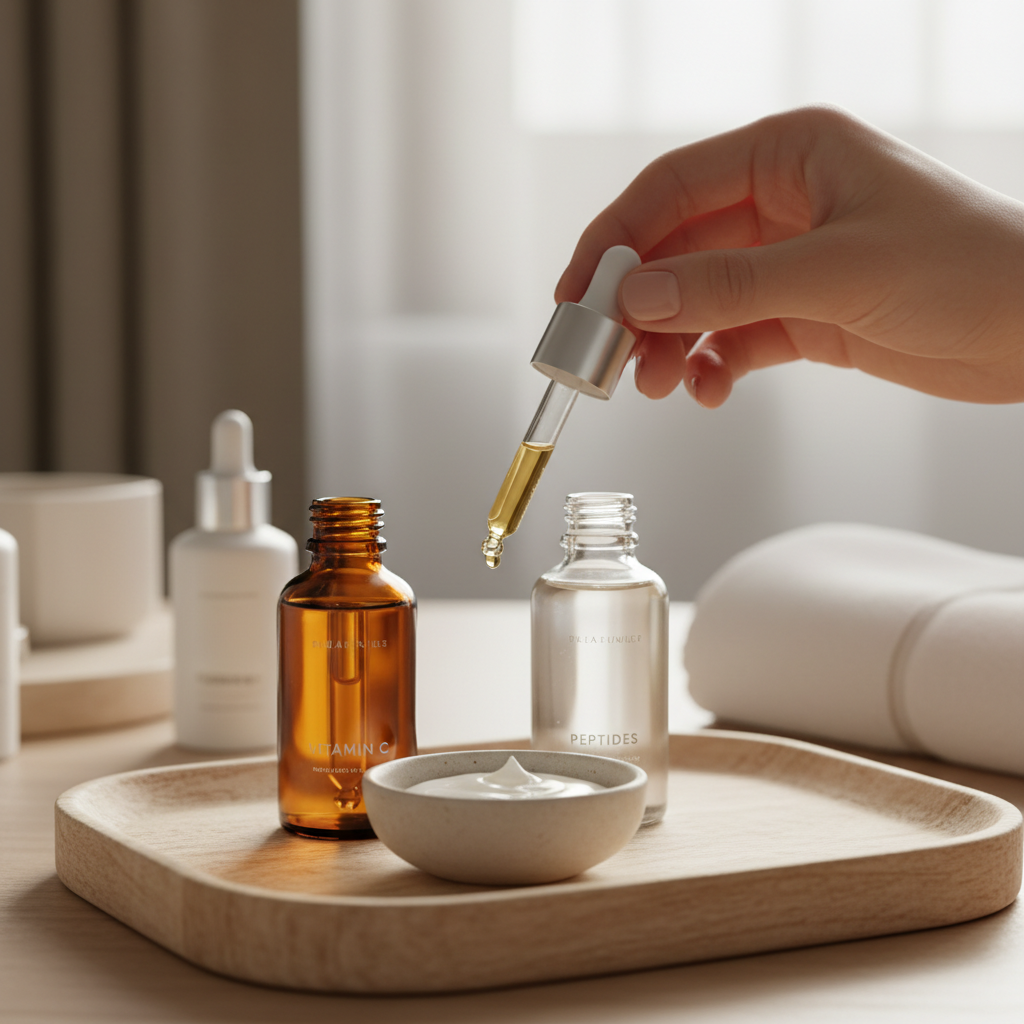
Vitamin C and peptides work beautifully together because they fight aging through separate doors. Vitamin C is your antioxidant shield and a collagen cofactor. Peptides are signals that tell skin to rebuild. Apply vitamin C first on clean skin, let it settle, then layer peptides on top, or split them between morning and night.
Why pairing these two outperforms either alone
Together, vitamin C and peptides hit collagen from two angles at once, which is exactly what mature skin needs. One protects what you already have. The other prompts your skin to make more.
Think of it as defense plus construction. Vitamin C neutralizes the free radicals from UV and pollution that chew through collagen every single day. Peptides, meanwhile, nudge fibroblasts to lay down fresh structural proteins. You get brighter tone and firmer texture, not one at the expense of the other.
In our experience with clients chasing that lit-from-within glow, the duo beats any single hero serum. The catch is sequencing. Stack them carelessly and you blunt both.
How vitamin C and peptides build collagen differently
Vitamin C is a required cofactor for the enzymes that assemble collagen, while peptides act as messengers that trigger new collagen production. Same goal, entirely different jobs.
Your skin literally cannot synthesize stable collagen without ascorbic acid present. It stabilizes the molecule as it forms and slows its breakdown. Peptides enter the story later. When collagen degrades, it sheds tiny amino-acid fragments, and certain peptides mimic those fragments to convince skin that repair is needed.
If you want the deeper biochemistry, our beginner’s guide to how peptides work breaks down each peptide class. The short version is simple. Vitamin C supplies the raw conditions. Peptides give the order to build.
The pH conflict nobody warns you about
The biggest layering issue is pH, because pure vitamin C and many peptides prefer opposite environments. L-ascorbic acid needs a low, acidic pH around 2.5 to 3.5 to penetrate. Most peptides perform best closer to neutral, roughly pH 5 to 6.
Slap a peptide straight onto a fresh acidic vitamin C layer and you create a chemical tug-of-war. Neither ingredient sits in its happy zone. The fix is restraint. Apply the low-pH product first, then give your skin a beat to recover its natural pH before the next step goes on.
Should vitamin C or peptides go on first
Vitamin C goes first, almost always. It is usually the thinner, lower-pH formula, and the rule of thumb is low pH before high pH, watery before rich.
After your vitamin C, wait until skin feels dry to the touch, generally one to two minutes for a stable derivative. Then peptides. The texture logic reinforces the chemistry here. A lightweight vitamin C serum absorbs fast, and a heavier peptide cream seals it without forming pills.
A classic mistake we see is flooding the face with everything in thirty seconds flat. Slow down. Those small pauses are what let each active actually work.
Why splitting them across day and night works best
Separating vitamin C into your morning and peptides into your evening sidesteps the pH problem entirely. Each one gets to perform at full strength with zero interference.
Vitamin C belongs in daylight. As an antioxidant it partners with sunscreen to disarm the free radicals generated by sun and smog, so a morning slot earns its keep. Peptides do their quiet rebuilding overnight, when skin shifts into repair mode and you are not layering SPF on top.
Here is the typical picture. Morning brings cleanser, vitamin C, moisturizer, SPF. Night brings cleanser, peptide serum, a richer cream. No clash, no compromise, less guesswork.
Copper peptides need extra distance from vitamin C
Copper peptides demand more separation than regular peptides, because copper ions speed up vitamin C oxidation through a redox reaction. Mix them in one wet layer and your vitamin C can degrade before it does anything useful.
GHK-Cu is a star for firmness and tone, but pair it directly with acidic ascorbic acid and you risk wasting both. The safest route is a full split: vitamin C in the morning, copper peptides at night. If you insist on the same routine, apply vitamin C, then wait twenty to thirty minutes for pH to normalize before the copper peptide step.
Choosing a vitamin C form that plays nice
If layering feels fussy, switch to a gentler vitamin C derivative that sits at a higher pH. Forms like magnesium ascorbyl phosphate and ascorbyl glucoside are far more peptide-friendly than raw L-ascorbic acid.
These derivatives skip the steep acidity, so the pH gap between your vitamin C and your peptides shrinks. That means shorter waits and far less chance of one undermining the other. They tend to be milder on reactive, sensitive skin too.
The trade-off is potency. Pure L-ascorbic acid is the gold standard for brightening punch. Derivatives convert more slowly but reward you with a smoother stacking experience, which most people actually stick to.
A simple stacked routine you can copy
The easiest reliable setup keeps potent actives apart and lets supporting ingredients fill the gaps. Below is a framework you can adapt to your own products.
- Morning: gentle cleanse, vitamin C serum, hyaluronic acid if you like, moisturizer, broad-spectrum SPF.
- Evening: cleanse, peptide or copper peptide serum, a nourishing night cream to lock it in.
- Same-routine option: vitamin C, pause one to two minutes for derivatives or twenty to thirty for copper peptides, then peptides.
Notice what anchors it. Sunscreen every morning, because antioxidants and SPF defend collagen as a team. Skip the sunscreen and you undo much of what these serums build.
How long before you see real results
Give the pairing twelve to sixteen weeks before you judge it. Collagen remodeling is slow biology, not an overnight filter.
You may notice surface brightness and hydration within a couple of weeks, which is encouraging but cosmetic. Genuine gains in firmness, fine lines, and texture take a full skin cycle and then some. Consistency beats intensity here. Most often we see people quit at week six, right before the visible payoff arrives.
Mistakes that quietly cancel the benefits
The fastest way to waste this duo is rushing the layers and ignoring pH. Both errors silently neutralize ingredients you paid good money for.
Patch test before you commit. Dab the combination behind your ear, wait twenty-four to forty-eight hours, and watch for irritation. Other avoidable slips include skipping the absorption pause, mixing copper peptides into wet vitamin C, and chasing too many actives at once. Start lean. Add one variable at a time so you actually know what is helping your skin.
FAQ
Can I use vitamin C and peptides in the same routine?
Yes, you can. Apply vitamin C first because it has the lower pH, wait until skin feels dry, then layer your peptide serum on top. For copper peptides specifically, leave twenty to thirty minutes between steps, or simply move them to your evening routine to avoid any oxidation.
Which goes on first, vitamin C or peptides?
Vitamin C goes first in nearly every case. It is the thinner, more acidic formula, and skincare follows a low-pH-before-high-pH and watery-before-rich logic. Let the vitamin C absorb for a minute or two, then follow with your richer peptide product so neither one pills or interferes.
Do copper peptides really cancel out vitamin C?
They can, if applied together while wet. Copper ions accelerate the oxidation of ascorbic acid through a redox reaction, degrading your vitamin C before it benefits the skin. Keep them separated by time of day, or wait twenty to thirty minutes between them, and both ingredients stay effective.
How long until I see anti-aging results?
Expect twelve to sixteen weeks for visible firmness and smoother texture. Early brightness can show within two weeks, but real collagen change follows a full skin cycle. Daily consistency matters far more than stacking high concentrations, so stick with it before deciding whether the routine works for you.
Is a vitamin C derivative better for layering with peptides?
Often, yes. Derivatives like magnesium ascorbyl phosphate and ascorbyl glucoside sit at a higher pH, so they clash far less with peptides and need shorter waits. They are gentler on sensitive skin, though pure L-ascorbic acid still delivers the strongest brightening effect if your skin tolerates it.